Tuesday, May 12, 2015

The Castle Builders--Parting Shots

Consider the fact that the volunteers who travel from Seattle to Tijuana to build homes are restricted to one-minute showers.

I knew this, and yet I only yesterday asked what kind of showers are taken by the people for whom we build tiny homes? And where do they throw their used toilet tissue?

In our focus on laying foundations and building walls for those rising castles, it was easy for me not to consider such basic details. Maybe someday these people will be able to take a luxurious two-minute shower.

In the illustration immediately below we have the blueprint for one of those magnificent new homes. An entire family will have approximately 450 square feet to spread out in--that's more than half the space of my cramped condo! There will be two spacious bedrooms (recamara), a kitchen (cocina) and another room we would probably call the living room (estancia).

These final scenes capture a bit of the spirit of  the two dozen volunteers who flew to Tijuana to help raise castles for two families. There's not a lot of text this time -- the photos tell a good share of the story all by themselves.

(By the way, sorry about the inconsistent type faces in this dispatch. Blogger can be a bit difficult at times and I'm on deadline.)

Floor plan for the house rising at the mobile home site.

Highlights of our headquarters

Drinking water

In the kitchen: Wash, rinse, bleach, dry, use again

The men's steel drum had only one note

At the demolition site:

Rip, tear.


The shirt on the lady with the hammer says "faith," "hope," and "love."


Persuasion

The persuader

The persuadesse

Uber-persuasion

Surgery unit


Leadership


The land

At the construction site:


Wire for tying rebar

Straightening rebar


 Eduardo Zavala Reyes, Esperanza volunteer coordinator, translates eulogies for an athlete, dying young* memoralized in the new home's foundation.


Checking out free samples at Costco while shopping for grub.


A late night run to the taqueria

Outcomes

This is how a finished home looked last year from the outside. . .


. . . and this is how it looked this year. You are viewing the end of a new wall that was added, because the castle is gaining a new wing. The lady of the house is caring for three disabled siblings, and the government assisted in the expansion.

What!? You were expecting a caption? Does this photo need a caption?


Well, that's a bit of what home building is about in Tijuana. Esperanza, the organization that coordinates these building projects, held a 25th anniversary celebration fiesta on May 7 at the Posada where the volunteers stayed. Photo below.

If any of you readers gets a hankerin to do the same thing, the folks at St. John Vianney Parish in Kirkland will be sending another team to Tijuana about this time next year, and they would gladly welcome more volunteers. And if you want to know more about Esperanza, the organization the volunteers support, here's their Web site: esperanzaint.org.

Love,

Robert, and
Wilson

Afterword:

The following is in honor of Chris Dubé, a hero to volunteers from St. John Vianney Parish in Kirkland, WA:

*To an Athlete Dying Young

The time you won your town the race
We chaired you through the market-place;
Man and boy stood cheering by,
And home we brought you shoulder-high.

Today, the road all runners come,
Shoulder-high we bring you home,
And set you at your threshold down,
Townsman of a stiller town.

Smart lad, to slip betimes away
From fields where glory does not stay,
And early though the laurel grows
It withers quicker than the rose.

Eyes the shady night has shut
Cannot see the record cut,
And silence sounds no worse than cheers
After earth has stopped the ears.

Now you will not swell the rout
Of lads that wore their honours out,
Runners whom renown outran
And the name died before the man.

So set, before its echoes fade,
The fleet foot on the sill of shade,
And hold to the low lintel up
The still-defended challenge-cup.

And round that early-laurelled head
Will flock to gaze the strengthless dead,
And find unwithered on its curls
The garland briefer than a girl’s.


Friday, May 8, 2015

Mud, death, memorials, tears and joy -- the final day


It rains and it rains all day
and this red dirt I'm workin' turns to clay
And clay ain't nothin' but a fancy name for mud,
red mud.
--from "Red Mud," 1950's-60's song by Sonny James

After a night of heavy rain, Friday started out as a "stick-to-your-shoes" day. The mud was slick and clingy.

Thursday night was miserably cold in my bed, due to heavy rain that continued into the morning. While we waited in hope for drier weather, some of us waited for our final volunteer work day by decorating One World Futbols with names, in the hopes of donating them.

Karen Maxell, a futbol donor (ball # 87) assigned several names of her choice. The ball with red lettering was named "Shrek," at my suggestion, which likely is a name familiar to most Mexican children.

Steve Ellis applied the name of a soccer star.

 After our late start to wait out the rain, the day lightened up, and after a bout of light rain the sun made a brief appearance.And that was helpful, because Friday was a chain-gang day, with cement being hauled in a bucket brigade. The drier weather meant less slipping and sliding on slick, sticky clay, over which the new home was being constructed.


The cement was poured inside the blocks, making a solid wall, and into the trenches for the footings.

As the work wound down toward day's end, another priority emerged -- the memorializing of a young man well loved by the long-time volunteers from St. John Vianney Parish in Kirkland. He was Chris Dubé, a Seattle resident who volunteered several times in Tijuana and twice in Ghana.

Chris seems to have been a bit of a contradiction--shy, and at the same time impossible to discourage. He was eulogized for finding swift solutions to the thorniest problems. His indomitable spirit led him to take risks, and he died in a rafting accident.

The Esperanza volunteers gathered at the construction site to pay homage to the young man lost.

Volunteer coordinator Jan Kline holds a photo of Chris Dubé. To her right is Emma Lidia Lara Reynoso, for whom the new home is being constructed.

Construction of the new home is dedicated to the memory of the young man.

Encased in a plastic sleeve, the photo of Chris Dubé is sealed in the cornerstone of Emma's new home.

The memorial was accompanied by a companion ceremony -- the gifting of a One World Futbol to the family for whom this group of volunteers had built a home last year. (See http://tjposada.blogspot.mx/2014/05/tijuana-skyline.html.) The ama de casa is Nico Bracomonto, pictured at the right, with her children. The daughter holds Wilson, while her son is holding Shrek, a ball named for my favorite Airedale.

Shrek was named for a movie character this family immediately recognized. The name was selected in the belief that all North American children probably know Shrek regardless of what side of the border they live on.

Roberto, the son, is on a team with a dozen players, and he demonstrated his dribbling ability by taking the ball to the street, where he was joined by some friends.

Shrek was a success, as attested by the inset closeups of the children's faces.

Three other balls, two of them bearing the Esperanza (hope) name, were provided to Emma. Two days before she had directed us to a local school and to a soccer mom who had a connection with 45 soccer youngsters divided into three age groups. Wilson and I would have liked to distribute more, but we were out of time. On Saturday there's a border to cross and a return flight to Seattle.

More to come, once Wilson and I are home.

Love,

Robert,
and Wilson


Mis Zapatos! (My shoes!)

Wilson and other third world technologies

We have this story beating around in our heads that sophisticated technologies are going to make our lives better. However, "sophisticated" usually indicates difficult and complex. But what is happening for the third world is the introduction of technologies that are affordable and simple. The technologies include masonry that requires no mortar, inexpensive water filters, teeth flouriding tool kits, smokeless cook stoves, shoes that grow, and Wilson, my virtually indestructible soccer ball which makes standard balls almost obsolete.


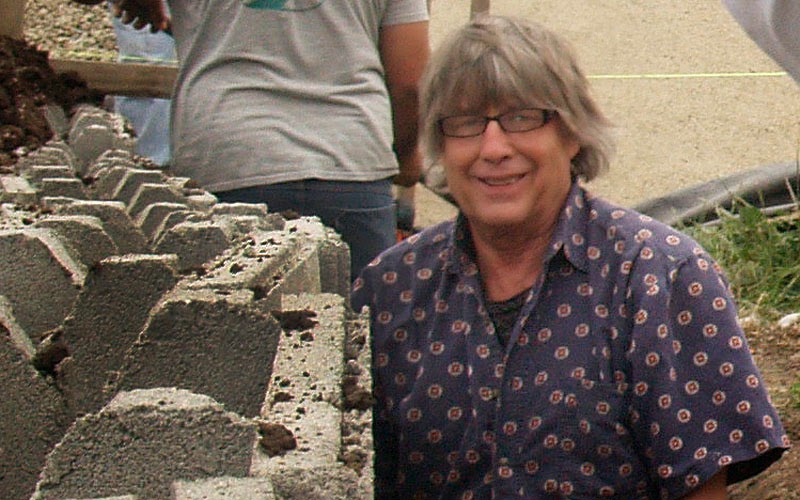
Wilson checks out the strange cinder blocks. Like many of you readers, the indestructible has never seen blocks like these before.


On Thursday I introduced Wilson to the Haener construction block. something many of you readers may remember from a year ago when I blogged about building a home for a poor family in Tijuana. (For that story, allow me to direct you to   http://tjposada.blogspot.com/2014/05/the-mighty-haener.html.)

The company which markets this block calls it the "mortarless interlocking system."  Their Web site adds:
Stacked without Mortar, Haener Block can be laid up to 10 times faster than conventional block by skilled, semi-skilled or unskilled laborers. Self-aligning and uniform, Haener Block structures look professional and aesthetic the first time, every time!
Oh, I should mention that last year I misspelled Haener. Well, it's spelled right this year--I think.

It's unclear to me what the rights of duplicating this technology are. As it was explained to me Thursday, families create these blocks and then Esperanza uses them when it comes time for volunteers to build the new home.

This bank gives an idea of the environment where we were making the blocks. You don't buy them at the store, you make them on site.


The blocks are made by shoveling sand and cement into this machine, which creates several types of  cinder blocks using molds. The white strip about mid-way up is a small pallet that supports the block. You shovel the mix in one side, the machine makes a whole lot of noise, and like magic, the block is ready to remove. Doesn't it kind of look like an old printing press?


A bird's eye view of the manufacturing site: sand pile to one side, cement bags, the mixer, and the cinder block machine. Start the presses!


Alex Cratsenberg grabs some pallets for the press.


Wilson watched some women folk drag sand into buckets that wait, like little birds, with their mouths agape.


A fish-eye view of the process. In the background someone feeds the mixer, while the press does it's magic. The shoveler isn't being lazy, just patient. The machine is full and the blocks are about to emerge.

By the way, I should mention that some of the people in these photos won't be identified. My traveling mouse has just stopped working and I have to move the pointer around using the &#*@!!?//(*)&$$ finger pad on this laptop. I hate those things. See what I mean about complicated technology? At least I have an excuse for typos in this dispatch.

Presto! Dos Haeneres (two Haeners). This provides a clear view of how the blocks interlock with blocks that are rested on top of them. Rebar lies in the grooves to further lock them together.


Moving the fresh blocks is a dicey process. If they are shocked or tapped they can fall apart. Susan Nadeau and a colleague wearing a hoodie and therefore known but to God, carefully walk across the work site and down an uneven dirt path over tires set into the ground to stabilize it. They deposited this pair of blocks in a spot with others, they will set up in a couple hours and then cure over the coming day.


Ooooops! See what I mean? One bump and the blocks can crumble at this stage. But then you just drop the broken pieces back into the press and try again.


Some of the sand had rocks in it, so one enterprising worker,Tonyia Cairns, scrounged out a piece of screen and they shoveled the sand into the bucket through the screen.


Occasionally the mixer needs to be cleared out.


Klaus Schweintek relies on his hammer to persuade caked-up mix to let go.


The work site: The wood frame structure that was demolished and then repositioned for the family's abode until a new structure is built; the doorway to the kitchen they will continue to use; and the newly-minted building blocks. We produced 158 of them in just a few hours. A home normally requires about 600.


I promised to tell you about some of the other technologies. Here's one of them -- the shoe that keeps on growing is pictured below. Now I'm not going to spoon feed you on this one -- Google "the shoe that grows" and find out how this simple technology is changing the lives of third world children.

Other simple and game-changing technologies I've come in contact with:
  • Break-open flouride kits that can be used on young mouths; you use the kit and discard it and it's good for about six months. I flourided a whole bunch of mouths four years ago using this technology in Peru. This story  and two others immediately below is told in my 2011 blog, incadiaries.blogspot.com.
  • Smokeless wood stoves that replace open hearths that women use the world over to cook indoors. The stoves are designed to carry all the smoke out of the home. Google the clean cook strove project. These stoves are easily repaired and use no expensive parts.
  • Ceramic water filters, which I helped make in Peru. They remove 99.9 percent of pathogens by simply allowing water to drain through a special ceramic pot made of clay, sawdust and water.
  • The One World Futbol -- a virtually indestructible ball that never needs replacing, and brings play to children all over the world in the world's most popular sport --soccer. You already know about that--that's what Wilson is all about.

The point of this is that there are simple ideas that are making strategic changes for the better in people's lives. These products demonstrate that there are solutions that don't require big expenditures, and which are sustainable. We are gaining increasing ability to deliver strategically useful and sustainable technology to ordinary people in the third world.

We can do this!

Since my mouse has died, it's going to be very difficult to deliver more commentary and photos until I'm home in a couple days. There's more to tell, and I hope you're interested. And thanks for coming along.

Love,

Robert, and
Wilson


Paola and Gustavo's youngest child stands at the kitchen doorway, aware that the home she knew is gone, and only mildly aware that the new, more dignified home she will grow up in will arise from those blocks beside her.